Translate

Tuesday, 31 March 2015

We need to talk about the D-word.

Death. Yep, I went there: I typed the D-word onto my computer screen.

It’s a word that frightens many people off and few will even dare to utter because it’s seen as a sort of poisonous substance that will burn the tongue. I know it’s still a massive taboo because at one point I forced myself to stop talking about it. And I’ve decided that that is really not the best way to go.

My dad died when I was thirteen years old. It was completely unexpected and his death unfolded in such a way that I really do think it merits being described using that so over-used word, tragic. His death at just 44 shook our whole family, both immediate and extended. My younger brothers were just four and five years old at the time.

DEATH IS SURE

I had heard of children losing their parents at a young age but I didn’t know anyone who had, at the time I lost my dad. It sounds so cliché but you never think of it happening to you. I knew of adults who had lost their parents but they had been bereaved in adulthood so it wasn’t the same. It so happens that within a few months of me losing my dad, I discovered that three of my friends, all the same age as me, had been struck by the same shock.

We all know we’re going to die someday, but few of us really seem to prepare for it. It seems far-off, especially in the age in which we find ourselves today, where medicine is better than ever before and people are living well into their seventies before death comes a-knocking.

But despite this, many people are scared of death. I’m not, because as a child of God I believe that eternal life is waiting for me in Heaven, a wondrous place that is better than anything that life could ever offer me – but if you don’t believe in an afterlife then I guess death really is the end-point for you. And the idea of being knocked down by a car at any time then can become quite scary. Alternatively people may become resigned to death, taking the position, “I’m going to die anyway, what’s the point in bothering with having a meaningful life?”

IT’S HARD: THE EMOTIONS THAT COME WITH BEREAVEMENT

My dad was a Christian. Having him taken away from us when life seemed to have so much to offer was hard, but at least we knew he was better off in the clouds.  Thinking ahead to my GCSE Results Day where I wouldn’t be able to triumphantly tell my scholarly dad of my grades; picturing my wedding day without a father to walk his daughter down the aisle… Yeah, that was sad. Something else that made things particularly difficult for me was the fact that my dad and I had never really been close – he had worked away from home a lot throughout my childhood and as a child I had already felt that I lacked that idyllic connection between father and daughter that every girl is supposed to have. Now I would never have that.

It wasn’t easy. I could have gotten angry at God and decided that He wasn’t worth following. Or I could have decided that He didn’t exist. But I didn’t. Actually, if you want to know the real truth, I was ready to pray for my dad to come back to life and see Jesus’ resurrection of Lazarus after four days re-enacted! (We didn’t do that though.)

The tension that had preceded my mum breaking the news to me turned to deep sorrow once I discovered that my fears were founded and he truly was gone. I don’t think I can ever forget the picture of sitting on my brother’s bed and my mum gently uttering those words to me. I don’t believe I have ever wailed like that before; not before and not since.

After the grief comes disbelief. It didn’t feel real. I had just come back from school and I was thirteen years old! As that day wore on and more and more people started piling into the house it became more real. I cried so much I started choking and my eyes turned to bulging red appendages on my face.

That’s when I started to lose my appetite. People tried to make me eat but I didn’t care. It didn’t taste right in my mouth.  All I could do was keep staring up at the photo of me and my mum and my dad when I was a kid and then thinking that the man in that picture was gone. I just kept staring in front of me and thinking. Thinking, thinking.

My mum has a lot to do with me getting through that rough patch the way I did. She kept strong for all of us even though she was having a really hard time of it herself. A case in point: she didn’t tell me and my brothers straight away; she waited until she was strong enough to be strong for us. Going through the pain of being bereft drew us closer together. We could talk about my dad in a way that family friends couldn’t; we knew the same man closely as a husband and a father.

GETTING UP AGAIN AND DEALING WITH LIFE AFTER LOSS

I see my mum as a big driving force behind me getting myself up again after my father died. I went back to school after two days (well, I had a weekend as well because I found out on the Wednesday evening). Nobody was expecting me back so soon. My classmates had been told the news and were very kind and supportive. People that had bullied me the week before came up to in the corridor and told me they were really sorry about having been mean to me. I even got a card signed by my whole form and personal cards and hugs from some of my teachers.

It meant a lot then and it still means a lot now, over six years on. But I found that not everyone could broach the issue that way. I remember one reaction in particular from a friend of mine when I told her the news. It still amuses me even now: “Oh. Do you want a crisp?” (Passing me the salt and vinegar crisp in her hand). I’ve also had people laugh awkwardly when I tell them that I don’t have a dad.

Others just avoided me.  In church of all places, at times I felt as though I was a contagious leper, where many of my peers completely avoided talking to me after I lost my dad. It was a hard pill to swallow. It took me some years to get over that actually, and I had to approach some of my friends to ask why they had completely deserted me at that time because it still hurt. After discussing it with them I better comprehend their reactions and I don’t blame them: death is something that we don’t teach ourselves to handle.

A few told me a few years later they didn’t want to make me cry when attempting to console me. But what people don’t realise is that any well-meant consolation is always greatly appreciated. It’s great to know that people care and can see you’re going through a hard time. And crying can be cathartic! It can help wash some of the hurt away. I don’t think it’s a bad thing to let a few tears stream from your eyes (do you hear me, guys??).

Others voiced their fear of not knowing what to say. I can tell you sincerely that something as simple as ‘I’m here if you need me’; ‘I’m sorry for your loss’ can go a long way. Other cutting comments however, like the throw-away “Life goes on” are not very helpful. Yes, life does go on. But saying so a matter of days after your friend has lost a loved one is not the most sensitive remark to make. Friends are supposed to build up and support one another.  

I had amazing people to help me through that time: people who would spend their break-times looking for me when I’d disappeared to have a cry in the toilet at school; people who would stay with me in my room to talk to me; those that would make the effort to come and visit; friends that would call persistently to make sure I was OK (I do believe one of my friends called me 64 times on the night she heard the news! Now that’s commitment for ya.).

FEELING APOLOGETIC ABOUT VOICING THAT WORD

But I found that after the immediate shock – perhaps because I got on with life as normal – people did seem to forget. I was still in the drama production at school, I was still in the choir, I was still working hard – so I seemed like the same person to many. I remember the sting I felt when some of my close friends asked me about ‘your parents’ a little after my dad had died.

I remember how I tried as much as possible to keep the word ‘dad’ out of any phrase I ever uttered. When I realised mid-way into a sentence that what I was about to say was going to involve saying that word I would search frantically for a way to change the sentence. Because almost certainly if I did say anything there would be undesirable consequences: either those that knew me at the time would turn to ash and look around awkwardly at the other people in the room, or instead look tentatively at me as I recounted whatever story I was trying to tell, or those that didn’t know anything about my family would ask, “Oh, what does your dad do?” and I would have to drop that bombshell word ‘dead’ into the conversation and THAT would kill the atmosphere… Or, as I’ve learned to do of late, I could just say “My dad WAS a civil and structural engineer” and then just hope they got that nuance. (As far as I can tell, only one person has ever noticed that nifty little change in verbal construction.) The problem is though, if they don’t get it, they may ask you another time about your parents and then you feel you have to explain. It seems strange that I’m the one that feels as though they’re walking on eggshells in such a situation. I wonder: if I don’t feel uncomfortable, why should anyone else? Talking about loss after you’ve experienced it, is cathartic.

Others can tell you, it’s pretty difficult growing up with only one parent in your teenage years and early adulthood. You always feel like you’re missing out on stuff. Parents’ evenings for you don’t look like they do for everyone else; when you go to and from uni you talk about your mum or your dad picking you up rather than your ‘parents’ (and loading the car takes longer); day-to-day conversations where your friends talk about that parent that you don’t have always have a drop of pain mixed in with them. But all of that would be made easier if we could just talk about that person even if they’re not alive, just like everyone else.

I may have lost my dad at thirteen but I still had a dad and he has a right to be part of my life story. In an age where I may live for 80-something years it seems pretty sad to have to silence talking about someone whose existence heralded mine for over 60 of those years. The years that I shared with my dad on this earth may only be a fraction of my whole life picture but if I want to remember and talk about the good times we had then that shouldn’t be a taboo. Just like you should be [able to] if you’ve lost a grandparent. Or if you’re a widower who wants to reminisce on the happiness he shared with his late wife. A grieving parent whose child has gone too soon. Or a brother left without a sister. What I’m saying is anyone that’s experienced bereavement (and if you haven’t yet you likely will at some point) should feel no need to sweep that part of their life (that BIG part of their life) under the carpet. It’s formed a part of who they are today. I believe if we talked more about death we wouldn’t be so scared of it. It seems strange to say it, but death is a part of life.


That’s why I’m not shying away from the D-word any longer. And I’m proud of my friends that don’t shudder or look away when I talk about my dad.


Friday, 20 March 2015

Todos ya sabemos que el racismo nace de la ignorancia. Lo que necesitamos abordar es cómo la sociedad solo crea más ignorancia.

Below is the translation of one of my posts into Spanish by a friend who thought it would be useful for some of his native Spanish-speaking friends to read. You can find the English version here:
http://thechannelforchange.blogspot.co.uk/2014/12/we-already-know-racism-is-rooted-in.html
I would like to inform those that read this that I do not speak any Spanish (French and Italian!) so I won't be able to respond to your comments in Spanish. Many thanks.

A la vista de los eventos recientes en Estados Unidos y acá en casa, es innegable que me he sentido profundamente agobiada por el peso que la gente como yo ha cargado por siglos- la maldad que se conoce como racismo.

Oh, no me mal interpreten – el racismo no es nada nuevo para mí. Fue a la tierna edad de nueve años que me di cuenta por primera vez que había algo conocido como racismo. Fue en el 2005 que Anthony Walker, un estudiante de raza negra de 18 años, fue brutalmente asesinado en un ataque racista que no fue provocado. Este también fue el año en el que me cambié de escuela, encontrándome ahora en una escuela de clase media alta, en un barrio casi exclusivamente de gente blanca, donde yo era la primear alumna de raza negra que la escuela había tenido en sus 101 años de existencia. Así que créanme, estoy acostumbrada a ser diferente. Siguiendo un camino similar, en mi escuela secundaria, que por encima creo que tenía 1,400 alumnos, yo era una de aproximadamente 13 personas negras. Cuando entré a sexto yo era la única estudiante negra en mi clase. Ahora en Oxford, soy la única estudiante negra en mi escuela estudiando lenguajes, la única persona negra en el coro de la escuela y en general en la universidad, soy definitivamente una minoría. Eso no es un problema para mi.

En lo que sí discrepo es, sin embargo, en el hecho que la gente negra como yo (y en general, las “personas de color”, si prefieren) tengan que pelear contra muchas injusticias solo por la razón que somos negros. Y esto es algo que nosotros conocemos, también. Los padres usualmente dicen a sus hijos: “trabaja el doble de duro en todo lo que hagas, porque te va a tomar el doble de esfuerzo llegar tan lejos como una persona blanca”

Me alegra decir que casi en su mayoría, las personas con las cuales yo me relaciono aborrecen el racismo y por lo tanto el racismo no es parte de mi vida personal. Pero lamentablemente aún hay muchas personas que tienen problemas con personas como yo. Hay personas que cruzarán al otro lado de la calle cuando ven a una persona negra. como yo aproximándose. Hay personas que cerrarán sus bolsos más fuertemente cuando un joven negro camina hacia ellos. Están aquellos que lloran: “¡Regrésate a tu país!”, con voces llenas de odio.
Bretaña y el Racismo


Gran Bretaña es una unidad multicultural de personas que solo ha alcanzado su estatus en el mundo debido al trabajo de las personas no – blancas durante muchos siglos. No tengo duda de que la verdad le hará daño a los oídos del BNP (Partido Nacional Británico, por sus siglas en inglés) y de los insignificantes miembros del UKIP (Partido de la Independencia del Reino Unido, por sus siglas en inglés) quienes hasta insisten en la repatriación. Supongo que ellos no saben que Gran Bretaña adquirió el título de “el Reino Unido de Gran Bretaña e Irlanda del Norte” debido a la colonización y la esclavitud que la llevó al poder.

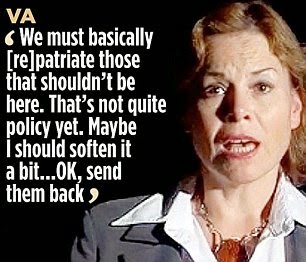
Victoria Ayling de UKIP  © Mail Online
“Debemos, básicamente, repatriar a aquellos que no deberían estar aquí. Eso no es una política aún. Tal vez yo debería ablandarlo un poco, está bien, mandarlos de regreso”

Es la insidia del racismo lo que empieza a preocuparme. Se pronostica que UKIP asegurará el 25% de los votos en las Elecciones Generales del 2015. Para un partido que está en las noticias todas las semanas porque algún miembro ha expresado algunos comentarios racistas, como aquellos que claman que algunas personas fueron “escogidas por la naturaleza” para ser esclavos y que fueron “marcados para ser subyugados” desde el nacimiento, un partido cuyos líderes piensan que está bien decir que él se preocuparía si una familia rumana se mudase a su lado, un líder de partido que excusa el comportamiento de los miembros racistas de su partido con frases como “estaban cansados” o “ha sido un largo día”… La idea que un partido de esta calaña pueda ser apoyado por un cuarto de la población nacional, bueno, es necesario decirlo, me preocupa.

Esto me hace pensar que probablemente no he sido tan bienvenida en Gran Bretaña como lo he pensado la mayor parte de mi vida. Yo solía pensar que solo personas en el mundo –a nivel general- podían odiarme porque soy negra, no personas específicas justo frente a mi puerta. Me tranquilizaba a mí misma pensando “bueno, mis amigos son fantásticos, difícilmente alguno de ellos piensa así”. Mis amigos pueden ser magníficos, pero me he dado cuenta que el racismo no es tan raro como crecí creyendo.

Muchas cosas han cambiado mi mente: cosas como que una persona que yo conozco le diga a su compañero de 10 años en la escuela que él “no pertenecía a este mundo porque eres negro”, cosas como que mis amigos negros sean detenidos y registrados por la policía porque supuestamente estaban planeando cometer un crimen, cosas como que mi amigo sea asemejado a un “mono”. Este tipo de cosas han cambiado mi mente. Este tipo de cosas me han hecho darme cuenta que realmente, Gran Bretaña no es tan abierta ni tolerante como pudimos pensar.

Usted podría sorprenderse que estas cosas todavía ocurran en el siglo 21. Usted podría sobresaltarse de saber que virtualmente cada persona que conozco tiene sus propias historias (sí, el plural es apropósito) de abuso racial. De hecho, las personas se sorprenden cuando lo opuesto es verdad: cuando usted no ha sido golpeado con una dosis de racismo. Le pregunto – ¿Realmente debería ser el caso que ir por la vida sin racismo pueda ser tan extraño?, ¿No debería ser al revés? ¿No debería ser el racismo raro? O mejor aún, ¿No existente?

Yo he desarrollado mis propias teorías sobre el racismo y sobre lo que deberíamos hacer para acabarlo.
El Papel de la Ignorancia

He encontrado (y la mayoría estaría de acuerdo) que el racismo es el resultado de la ignorancia. Las personas que están asustadas cuando ven a una persona negra acercarse o que creen que los Africanos “buscan entre la basura” o que los Jamaiquinos no estudian (todo cortesía de experiencias de la vida real) se sienten de esta manera porque no conocen nada mejor. Déjenme decirles por qué.

En los medios estamos acostumbrados a ver a jóvenes negros representados como matones criminales que roban y asesinan y son parte de bandas. Estamos acostumbrados a ver publicidad de África en la que se reduce a un solo país negro (¿Ustedes sabían que África es un continente con 54 países?).

Déjenme darles una conversación típica que demuestra esta clase de ignorancia.

Fui a África en mi año sabático
Oh, ¿En serio?, ¿En qué parte de África?
Namibia. 
Oh, entonces fuiste tan solo a un país.

Conversación imaginaria terminada. ¿Quién dice “Fui a Europa en mi año sabático“? Nadie. No, porque usted diría “Fui a España”, o “Fui a Francia”, o fui a cualquier país específico. Pero África está agrupada como la tierra pobre, anclada en la pobreza, y devastada por las enfermedades, que necesita ayuda.

Por eso es que hay tantas personas que quieren estar alejadas de las personas negras. Para ellos, el negro como una raza significa “pobre”, “sin educación”, “criminal”, “sucio”, “como animales” (y en muchos casos, feos, como ya he señalado – ver “Por qué la Definición Mundial de Belleza está Totalmente Equivocada”).

El Curriculum Nacional

El Sistema educativo solo propaga esta mentalidad errónea. Incluso en la escuela estamos  acostumbrados a relegar a las personas negras a un estatus de segunda clase. La única historia negra que he aprendido en la escuela fue el papel de América en el comercio de esclavos y la prominencia del Ku Klux Klan, con un poco del pacifismo de Martin Luther King’s  en la Educación Religiosa. Oh, y también había un tipo negro en Of Mice and Men.

¿Cuál es el problema con eso? Podría preguntar. Usted podría estar feliz que las personas negras estén apareciendo en el sistema educativo. Lo estoy. Pero toda la historia negra que nos enseñaron después relaciona a las personas negras con negatividad. Las personas negras solo están cocidas en el tapete de la historia en el sistema educativo como personas que tienen poco o ningún derecho y que han sufrido por eso. Rosa Parks y Martin Luther King fueron grandes personas que pelearon contra la injusticia y deberían ser reconocidas por eso. Pero ellos pelearon en contra de cosas que no deberían existir en primer lugar. Las leyes de Jim Crow y la segregación nunca debieron existir, ni el Ku Klux Klan, o el comercio de esclavos.

Todo lo que me enseñaron sobre la historia negra en la escuela fue que las perosnas negras siempre han sufrido. Nunca me enseñaron sobre las personas negras que hicieron grandes cosas. Nunca me enseñaron sobre Mary Seacole, la enfermera jamaiquina que atendió a los heridos británicos durante la Guerra de Crimea. De una manera interesante, también, he conocido sobre Florence Nightingale desde una edad muy tierna. Increíblemente, solo encontré sobre Mary Seacole este año. Boris Johnson, el Alcalde de Londres, ha revelado que él solo la descubrió en el 2005; ella “parece haber sido un personaje tan importante que me encontré a mí mismo enfrentando la grave posibilidad que era mi propia educación la que era estrecha”. Sorprendentemente, a pesar de esto, el pasado Secretario de Educación Michael Gove reveló este año planes para removerla completamente del curriculum, un curriculum el cual solo había incluido la enseñanza obligatoria de la historia negra en el 2008. Los planes de Tory rápidamente echaron por tierra la petición hecha por Operación Voto Negro, con la creación de un petitorio muy acertado: “En mi opinión, Mary Seacole es la única persona de color cuya enseñanza no se da a través del lente del racismo”.

Olaudah Equiano es otro nombre que lamentablemente solo pude descubrir hasta este año. Un antiguo esclavo nacido en lo que ahora es el sur de Nigeria, Olaudah trabajó fuerte para comprar su propia libertad, eventualmente desempeñó un rol significante en la abolición de la esclavitud y escribió una célebra autobiografía. Michael Gove quería quitarlo también a él del curriculum.

Es muy lamentable que la historia negra fuera obligatoria solo después que dejó de aplicarse a estudiantes de mi edad. Pero además de lo que ya he dicho sobre lo poco que aprendí de historia negra en la escuela, también encontré consternante  que toda la historia negra que aprendí (la cual fue toda negativa) tenía que ver con Estados Unidos. Aprendimos sobre el rol malo, sucio y terrible de Estados Unidos en el comercio de esclavos. Aprendimos sobre los horríficos linchamientos en el Sur profundo (aquellos Estados ubicados en lo que hoy es el Sur este de Estados Unidos. N. del T.), promovidos y realizados por el Ku Klux Klan. Aprendimos sobre las obras heroicas de Martin Luther King y Rosa Park tomando parte en contra de estas atrocidades. Nunca aprendimos que las personas negras que inmigraron a Gran Bretaña en los 50s en el Windrush fueron tratadas de una manera no muy diferente a la de los americanos en los 60s., aprendimos sobre la Primera Guerra Mundial más veces de las que puedo mencionar y el Holocausto apareció en nuestras lecciones; pero nunca aprendimos sobre la colonización británica de 102 países alrededor del mundo y su rol en el holocausto que fue el comercio de esclavos. Nunca aprendimos que estas mismas colonias subyugadas dieron sus vidas por la causa Británica en la Primera Guerra Mundial: solo India mandó más de 1,5 millones de personas a pelear en la guerra. El 11 de noviembre de este año, justo como cualquier otro año, el mundo no recordará esto.

Los majestuosos hogares y los lugares del Patrimonio Inglés que apreciamos y atesoramos, fueron casi literalmente, construidos sobre la sangre, el sudor y la sangre de los esclavos. Cientos de familias ricas Británicas hicieron su fortuna de las plantaciones poseídas por ellos en el Caribe, e incluso cuando el tráfico de esclavos fue finalmente abolido en Gran Bretaña, los dueños recibieron miles de libras en “compensación” por la propiedad perdida. Estos miles de libras equivalen a millones de libras actualmente.
La mayor de estas compensaciones equivaldría a 65 millones de libras de hoy. El Primer Ministro de nuestro país, David Cameron, es una de las pocas familias que aún gana beneficios de esta “compensación” hoy en día. Por eso es que es un problema decir que deberíamos “olvidar el comercio de esclavos”. Esto definitivamente todavía impacta en el presente. Gran parte de los estereotipos raciales y el sometimiento racial que vemos hoy en día puede ser rastreados hasta sus orígenes en la esclavitud.
Conocí a la Baronesa Doreen Lawrence este año, la madre del adolescente negro Stephen Lawrence quien fue asesinado en un ataque racista no provocado en Londres en 1993. Lo que arruina nuestra fe es que sus asesinos fueron capturados y encarcelados 19 años después. Doreen y la campaña incansable de su esposo Neville por justicia ha traído un cambio real en el Reino Unido, revelando la permanencia de racismo institucional, particularmente adentro de las fuerzas policiales. El racismo institucional que podemos ver tiene sus orígenes también en las fuerzas policiales estadounidenses y su sistema judicial. Le pregunté a esta extraordinaria mujer qué creía que debería hacerse para borrar el racismo. Su respuesta fue: “Necesitamos enseñar a las personas negras sobre su historia”. Sus palabras sin duda me han inspirado.
Después de una conversación con la Baronesa Lawrence en Oxford Union

Este verano me enfoqué a trabajar en esta tarea. Quería aprender sobre la historia negra que nunca me habían enseñado. Quería conocer sobre las vidas de las personas negras en la Gran Bretaña Eduardiana y Victoriana. Busqué evidencia de que las personas negras no habían sido siempre ciudadanos de segunda clase o esclavos. Encontrando esto, podría educar a otros, y mostrarle al mundo en general que las personas negras valen mucho y que han alcanzado grandes cosas. Si más personas supieran este hecho, indudablemente habría mucha menos de esta ignorancia y estereotipo racial que perdura en todo el mundo.

La evidencia de la enorme tarea que me propuse este verano
Bueno, con el verano lleno y una larga lista de lectura de mi carrera universitaria en ese tiempo, lamentablemente no pude leer todos los libros que mi propuse en mi lista de lectura auto-educativa, pero si logré leer algunos, y estos libros me han enseñado mucho sobre historia negra en Europa durante siglos y las contribuciones positivas que ellos le hicieron a la sociedad.

Mes de Historia Negra. Celebrando algunos de los logros de las Personas Negras

Después de ver la luz, me he vuelto muy apasionada de la historia negra. Este año, en el Mes de Historia Negra hice el mayor esfuerzo para asistir a todo lo que pudiera informarme sobre el tema. Yo ni siquiera sabía que existía un Mes de Historia Negra hasta hace unos pocos años, y con toda seguridad nunca se le dio ninguna atención en las escuelas a las que asistí, así que realmente se veía solo como un nombre para mi, como el Día de los Hermanos o algo así. Pero este año me propuse que fuera significativo. El evento más enriquecedor al cual asistí este Octubre fue el evento “Asunto Oscuro” organizado por la Sociedad Africana y Caribeña de nuestra universidad. Los invitados especiales fueron los poetas Anthony Axanagorou y Akala, quien  tocó temas como el racismo y la desigualdad de género. Yo misma hablé en ese evento, mencionando asuntos que pueden leer en mis otros posts.

Pero fue después de la brillante presentación de Akala sobre la contribución de las personas africanas a la civilización que realmente me inspiré. De él aprendí:
1.       Que los antiguos egipcios eran blancos como yo (los exámenes post mortem han revelado que de hecho tenían más melanina en su piel que una persona negra del promedio hoy en día).
2.       Que ellos descubrieron el Teorema de Pitágoras antes que Pitágoras naciera.
3.       Fueron los primeros en descubrir que la Tierra giraba en torno al sol.
4.       Sobre las Paredes de Benin (construidas en lo que ahora es Nigeria), que abarcaban la increíble distancia de 10,000 millas. Lamentablemente fueron destruidas por los británicos durante la colonización.
5.       Sobre las increíbles complejidades de la arquitectura de los edificios históricos en el vasto continente.
6.       Y mucho más.
Si usted desea más información sobre estos aspectos de la historia, la lista de lectura de Akala podría ser útil: http://illastate.posthaven.com/black-african-history-month-reading-list


 A través de Akala aprendimos que el pueblo negro ¡también tiene historia! Las personas negras también alcanzaron increíbles hazañas que han contribuido a la civilización en general. Las personas negras son parte de la historia mundial.  La única razón por la cual existe el Mes de la Historia Negra es que las personas negras son excluidas del rico tapete que es la historia global. Así que nosotros tenemos que hacer nuestro propio tapete. Sueño con el día en el que no necesitamos una entidad separada porque estaremos todos incluidos. Sueño con el día en el que no necesitamos tener activistas por los derechos civiles porque todos tendremos lo mismos derechos que merecemos.

Nadie nace racista. El racismo es un mal que es diseminado por aquellos cuyo poder el mismo racismo sostiene. Lo que tenemos que hacer es educar a más personas para que no vivan sus vidas con esta ignorancia y que hagan horribles las vidas de los demás. Si usted quiere estar lleno de esperanzas por la siguiente generación y asegurarse que no todos tengan estas perspectivas rencorosas, entonces le gustará ver este video. Kids React Cheerios Advert

Y finalmente, si usted cree que esto por lo que estoy luchando tiene alguna importancia, entonces ¡por favor firme esta petición para educar a las personas en historia negra!

Gracias.

Tuesday, 16 December 2014

We already know racism is rooted in ignorance. What we need to address is how our society only creates more ignorance.

In light of recent events in the United States and here at home, it is undeniable that of late I have felt myself heavily burdened by the weight that people like me have been laden with for centuries – the evil known as racism.

Oh don’t get me wrong – racism is nothing new to me. It was at the tender age of nine that I first realised that there was such a thing as racism. It was in 2005 that Anthony Walker, an 18-year old black student, was brutally murdered in an unprovoked racist attack. This was also the year in which I moved school, finding myself in an upper-middle-class, almost exclusively-white town where I was the first black pupil the school had ever had in its 101-year existence. So trust me, I’m used to being different. Following in a similar vein, at my secondary school, which at a rough guess was about 1400 pupils strong, I was one of about thirteen black people. In my year I was one of two. By the time sixth form swung round I was the only black student in my year group. Now at Oxford, I’m the only black student in my college studying languages, the only black person in the college choir, and in the university at large, I’m definitely in the minority. That’s not an issue for me.

What I do take issue with, however, is the fact that black people like me (and, more generally, ‘people of colour’, if you will), have to come up against a lot of injustice just by virtue of the fact that we’re black. And it’s something we know, too. Parents often tell their kids: ‘Work twice as hard at everything you do, because it’s going to take twice as much effort for you to get as far as a white person’.  

I am glad to say that for the most part, the people with whom I relate abhor racism and hence racism is not really a part of my own personal life. But sadly there are still a lot of people who have a problem with people like me. There are people who will turn the other way when they see a black person like me approach. There are people who will clutch their bags tighter when a black boy walks down the road in their direction. There are those that cry: “Go back to your country!”, their voices curdled with hate.

Britain and Racism

Britain is a multicultural net of people which has only achieved its status in the world because of the labour of non-white people over many centuries. No doubt that truth right there will hurt the ears of the BNP (British National Party) and those countless UKIP (UK Independence Party) members who insist upon repatriation.  

Victoria Ayling of UKIP © Mail Online
It’s the insidiousness of racism that’s starting to make me worried. UKIP is predicted to secure 25% of the vote in the 2015 General Election. For a party that’s in the news every week because yet another member has uttered some deeply racist remarks, like those that claim certain people were ‘intended by nature’ to be slaves and were ‘marked out for subjection’ from birth; a party whose leader thinks it is OK to say that he would be worried if a Romanian family moved in next door to him; a party leader who excuses his racist party members’ behaviour with phrases like they were ‘tired out’, it had been a ‘long day’… The thought that a party of this ilk might be supported by a quarter of the national population – well, needless to say, that worries me.

This makes me realise that I’m probably not as welcome in Britain as I’ve spent most of my life believing. I used to think that it was just people in the world ‘at large’ that could hate me because I am black, not specifically the people right outside my front door. I comforted myself by thinking, Well, my friends are great, hardly anyone has those views any more. My friends may be great, but I've realised that racism isn't as rare as I had grown up to believe. 

Lots of things have changed my mind: things like someone I know being told by his 10-year-old classmate at school that he ‘didn’t belong in this world because you’re black’; things like my black male friends being stopped and searched by the police because supposedly they are planning to commit a crime; things like my friend being likened to ‘a monkey’.  These sorts of things have changed my mind. These sorts of things make me realise that actually, Britain isn’t as open and accepting as we might like to think.

You might be surprised that these things are still going on in the 21st century. You may be startled to learn that virtually every black person I know has their own stories (yes, that was meant to be plural) to tell of racist abuse. In fact, people are actually surprised when the opposite is true: when you haven’t ever been struck with a dose of racism. I ask you – should it really be the case that going through life without racism should be so rare? Shouldn’t it be the other way around? Shouldn’t racism be rare? Or better yet, non-existent?

I have developed my own theories on racism and what we need to do to root it out.

The Role of Ignorance 

I’ve found (and most would agree) that racism is a result of ignorance. The people that are scared when they see a black person approach or believe that Africans ‘scavenge for food’ or that ‘Jamaicans don’t study’ (all courtesy of real life experiences) feel this way because they don’t know any better. Let me tell you why.

In the media we are used to seeing young black males represented as criminal thugs who steal and kill and are part of gangs. We are accustomed to seeing adverts of Africa which reduce it to one big, backward country (do you know Africa is a continent with 54 countries?). 


Let me give you a typical conversation which demonstrates this kind of ignorance:

I went to Africa for my gap year.

Oh, did you? Where in Africa?

Namibia.

Oh, so you just went to one country then.


Imagined typical conversation over. Who says ‘I went to Europe for my gap year’? Nobody. No, because you would say ‘I went to Spain’, or I went to France’, or I went to whichever specific country it was. But Africa’s all just lumped together as the poor, poverty-stricken, disease-ravaged land that needs help.

No wonder so many people want to stay away from black people. For them, black as a race means ‘poor’, ‘uneducated’, ‘criminal’, ‘dirty’, ‘like animals’ (and in many cases, ugly, as I’ve already addressed – see Why the World's Definition of Beauty is All Wrong).

The National Curriculum

The education system only propagates this erroneous mind-set. Even at school we’re used to seeing black people relegated to second-class status. The only black history I ever learnt at school was America’s role in the slave trade and the prominence of the Ku Klux Klan, with a bit of Martin Luther King’s pacifism thrown in Religious Education. Oh, and there was a black dude in Of Mice and Men.

What’s the problem with that? You may ask. You should be happy that black people are being featured in the education system. I am. But all the black history we’re taught further connects black people with negativity. Black people are only sewn into the tapestry of history in the education system as people who had little or no rights and suffered because of it. Rosa Parks and Martin Luther King were great people who fought against injustice and they should be recognised for it. But they fought against things that shouldn’t have existed in the first place. The Jim Crow laws and segregation should never have been a thing. Neither should the Ku Klux Klan. Or the slave trade.

All I was ever taught as regards black history at school was that black people have always suffered. I was never taught about black people who did great things. I was never taught about Mary Seacole, the Jamaican-born nurse who attended to the wounded in Britain during the Crimean War. Interestingly, though, I’d known about Florence Nightingale from a very young age. Unbelievably, I only found out about Mary Seacole this year. Boris Johnson, the Mayor of London, has revealed that he only discovered her in 2005: she ‘seems to have been such a megastar that I find myself facing the grim possibility that it was my own education that was blinkered’. Amazingly, despite all this, the former Education Secretary Michael Gove this year uncovered plans to completely remove her from the curriculum, a curriculum which only made the inclusion of black history compulsory in 2008. The Tory’s plans were quickly scuppered by a petition by Operation Black Vote, with the creator of the petition asserting:  “To my reckoning, Mary Seacole is the only person of colour talked about not through the sole prism of racism.”

Olaudah Equiano’s another name that sadly I only discovered this year. A former slave born in what is now southern Nigeria, Olaudah worked hard to buy his own freedom, eventually playing a significant role in the abolition of slavery and writing a noted autobiography. Michael Gove wanted him off the curriculum as well.

It’s very unfortunate that black history was made compulsory only after it no longer applied to students my age. But as well as what I’ve already stated about the little that I did learn at school, something else I find striking is that all the black history (which was all negative) we were taught was to do with America. We learnt about America’s bad, naughty, awful role in the slave trade. We learnt about the horrific lynchings in the deep South and tarring and feathering by the Ku Klux Klan. We learnt about the heroic deeds of Martin Luther King and Rosa Parks in taking a stand against these atrocities. Never did we ever learn that black people who immigrated to Britain in the 50s on the Windrush were treated not unlike black Americans in the 60s. We learnt about World War 1 more times that I can list and the Holocaust featured in our lessons - but we never learnt about Britain’s colonisation of 102 countries around the world and its role in the holocaust that was the slave trade. We never learnt that these same subjugated colonies gave their lives for the British cause in World War One: India alone sent some 1.5 million men to fight in the war. On the 11th November this year, just like every other year, the world didn’t remember this.

The stately homes and English Heritage sites that we prize and treasure, were quite literally, built on the blood, sweat and tears of slaves. Hundreds of rich British families gained their wealth from the plantations they owned in the Caribbean, and even when the slave trade was finally abolished in Britain, the owners gained thousands of pounds in ‘compensation’ for the ‘loss of property’. These thousands would equate to millions in today’s money. 

The biggest single pay-out of this vein would equate to £65m today. The Prime Minister of our country, David Cameron, is one of the many families who still profit from this ‘compensation’ today. That’s why it’s a problem to say that we should ‘forget the slave trade’. It definitely still impacts upon the present. Much of the racial stereotypes and racial subjugation we see today can be traced back to slavery.

I met Baroness Doreen Lawrence this year, the mother of the black teenager Stephen Lawrence who was murdered in an unprovoked racist attack in London in 1993. What beggars belief is that his killers (and not even all) were only convicted and imprisoned 19 years later. Doreen and her husband Neville’s tireless campaign for justice has brought about real change in the UK, in that it revealed the prevalence of institutional racism, particularly within the police force. Institutional racism that we can see is also rooted in the American police force and judicial system.  I asked this extraordinary lady what she believed needed to be done to efface racism. Her answer was: “We need to teach black people about their history”. Her words have since doubtless inspired me. 


After a chat with Baroness Lawrence at the Oxford Union
This summer I set to work on this task. I wanted to learn about the black history I’d never been taught. I wanted to find out about the lives of black people in Edwardian and Victorian Britain. I sought the evidence that black people have not always been second-class citizens and slaves. Finding this, I could educate others, and show the world at large that black people are worth it and have achieved great things. If more people knew this fact there would surely be less of this ignorant, racial stereotyping that goes on all over the world. 

The evidence of the all-out task I set myself this summer

Well, with a packed summer and a long reading list to get through for my university degree in that time, I sadly didn’t get through all the books on the self-educating reading list I set myself but I did manage a few books, and those books have taught me much about black people in Europe over the centuries and the positive contributions they made to society.

Black History Month: Celebrating some of the achievements of Black People

After seeing the light, I’ve become very passionate about black history. This year’s Black History Month I made the utmost effort to attend anything I could that would inform me on the topic. I didn’t even know about Black History Month until a few years ago, and it certainly wasn’t given any attention at my schools, so it largely just seemed like a name to me, like World Siblings Day or something like that. But this year I made it count. The most enlightening event I attended this October was the ‘Dark Matter’ event organised by our university’s African and Caribbean Society. The special guests were poets Anthony Axanagorou and Akala, who rapped on deep-seated issues like racism and gender inequality. I myself also spoke at the event, addressing the issues you can find in my previous post.  


But it was Akala’s brilliant presentation on the contribution of African people to civilisation that really did it for me. From him I learnt:

  • the early Egyptians were black like me ( post-mortems have in fact revealed they had more melanin in their skin than the average black person today)
  • that they discovered 'Pythogoras’ theoreom' before Pythagoras was born
  • they were the first to discover that the Earth revolved around the Sun
  • About the Walls of Benin (built in what is now Nigeria), which spanned the incredible distance of 10,000 miles. They were sadly destroyed by the British during colonisation.
  • About the astounding intricacies of the architecture of historical buildings in the vast continent
  • And much more!
If you'd like further information on these aspects of history, Akala's reading list may be useful: http://illastate.posthaven.com/black-african-history-month-reading-list


Through Akala we learnt that black people have history too!! Black people also achieved incredible feats which have contributed to civilisation as a whole. Black people are part of world history. The only reason Black History Month exists is that black people are excluded from the rich tapestry that is global history. So we’ve had to make our own tapestry. I long for the day when we don’t need to be a separate entity because we’ll be included. I long for the day when we don’t have to have civil rights activists because we will all have the same rights we deserve.  

Nobody is born racist. Racism is an evil that is diffused by those whose power it sustains. What we need to do is educate people so that they don’t live their lives with this ignorance and make lives horrible for others. If you want to be filled with hope for the next generation and be assured that not everyone holds these malicious views, then you may like to watch this video: Kids React Cheerios Advert

And finally, if you believe that what I’m standing for is worth any value, then please sign this petition to educate people on black history! 

Thank you.